The goal of the road pricing project was to tax car drivers depending on their use of the Dutch roads. Road pricing was proposed by former minister of transport Netelenbos in 2001. It was to be developed and implemented in 2002-2003 and was to be fully operational by 2006.
Each car was supposed to be equipped with a device consisting of a number of components, amongst which a GPS receiver, a GSM unit and a smart card. At regular intervals (say every 10 seconds) the device would check the car's current position, look up the road type for that position and store this information. Once a week a GSM connection to a central server would be made and the information gathered by the device would be uploaded.
The smart card was included to ensure the device could not be tampered with and to authenticate the car. At (secret) locations along the road, the device could receive cryptographic challenges which would have to be answered (we imagine) immediately by having the smart card sign them and transmitting the resulting signature. If a challenge was not answered in time, the car's license plate would be photographed.
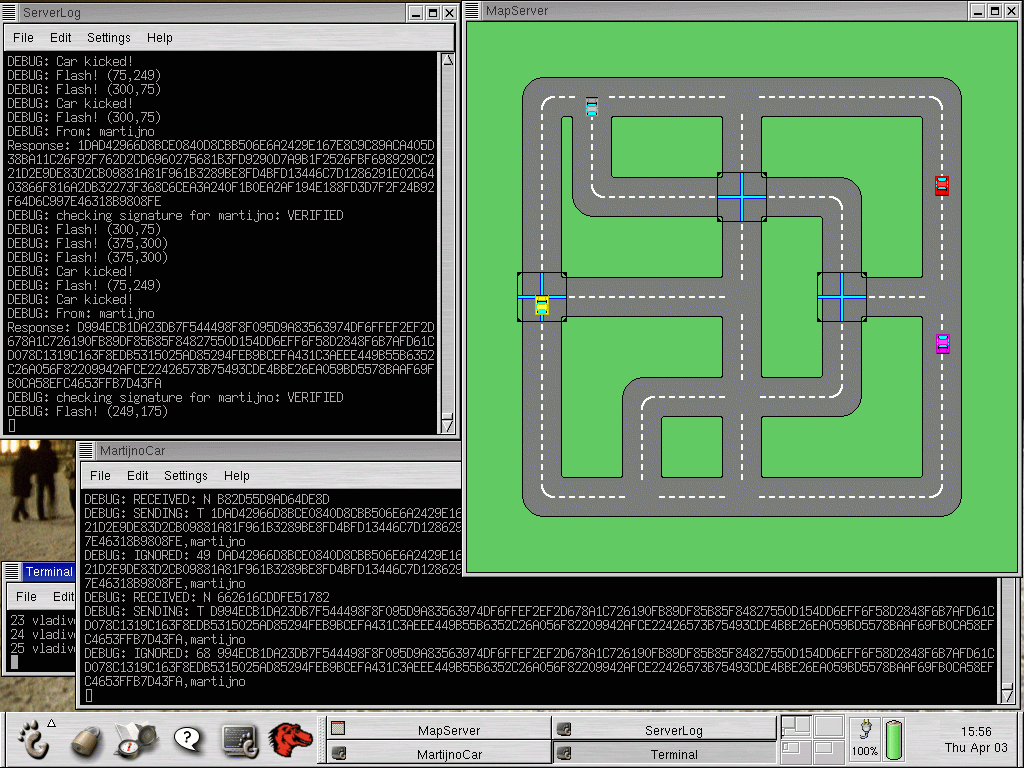
Here are a few screenshots from our Roadpricing Demo.
|
Here you see a screendump of the complete screen. Basically it consists of three windows. |
|
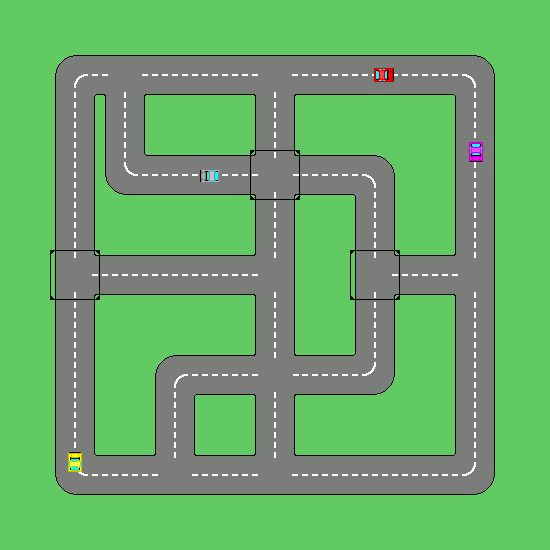
The map window. On this map you can see the cars driving around. Furthermore you can see the three check points where a car has to answer the challenge sent to him properly. |
|
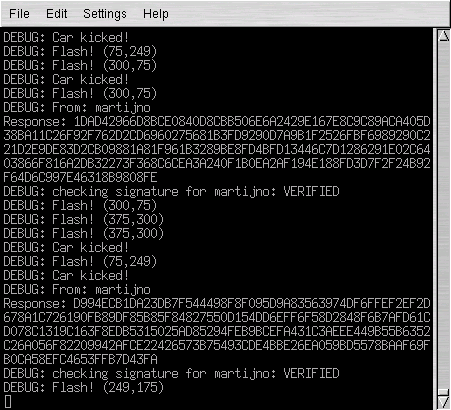
This window shows the information that the server has. Everytime a car passes a checkpoint a challenge is sent to the car. If the owner of the car has payed the proper taxes, the car has got the right certificate and will be able to respond correctly. In this example the 'martijno' car is the only one who responds properly as can be seen in the log. The other cars cannot respond properly and are being booked, indicated by the 'Flash!'. After three flashes, a car is kicked from the road. |
|
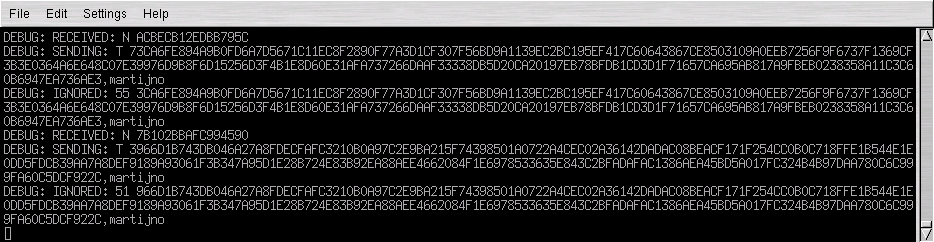
This window shows the challenges that are being sent by the server to the 'martijno' car. Furthermore the computed responses are shown here. |
People who worked on this: Engelbert Hubbers, Martijn Oostdijk, Martijn Warnier.